Hubs in practice
What communities in our network do with their hubs.
Most of these hubs are run for a field by a program or funder, such as NASA Earthdata, NSF CloudBank, NOAA’s CIROH, and CZI, that sponsors one or more hubs for the communities it serves.
Analyze data where it lives ⋅ Learn as a field ⋅ Thousands of students ⋅ Networks of hubs ⋅ Predictable costs ⋅ Workshops ⋅ Notebooks, RStudio, desktops ⋅ GPUs ⋅ Generative AI ⋅ Run analyses from a link ⋅ Take it anywhere
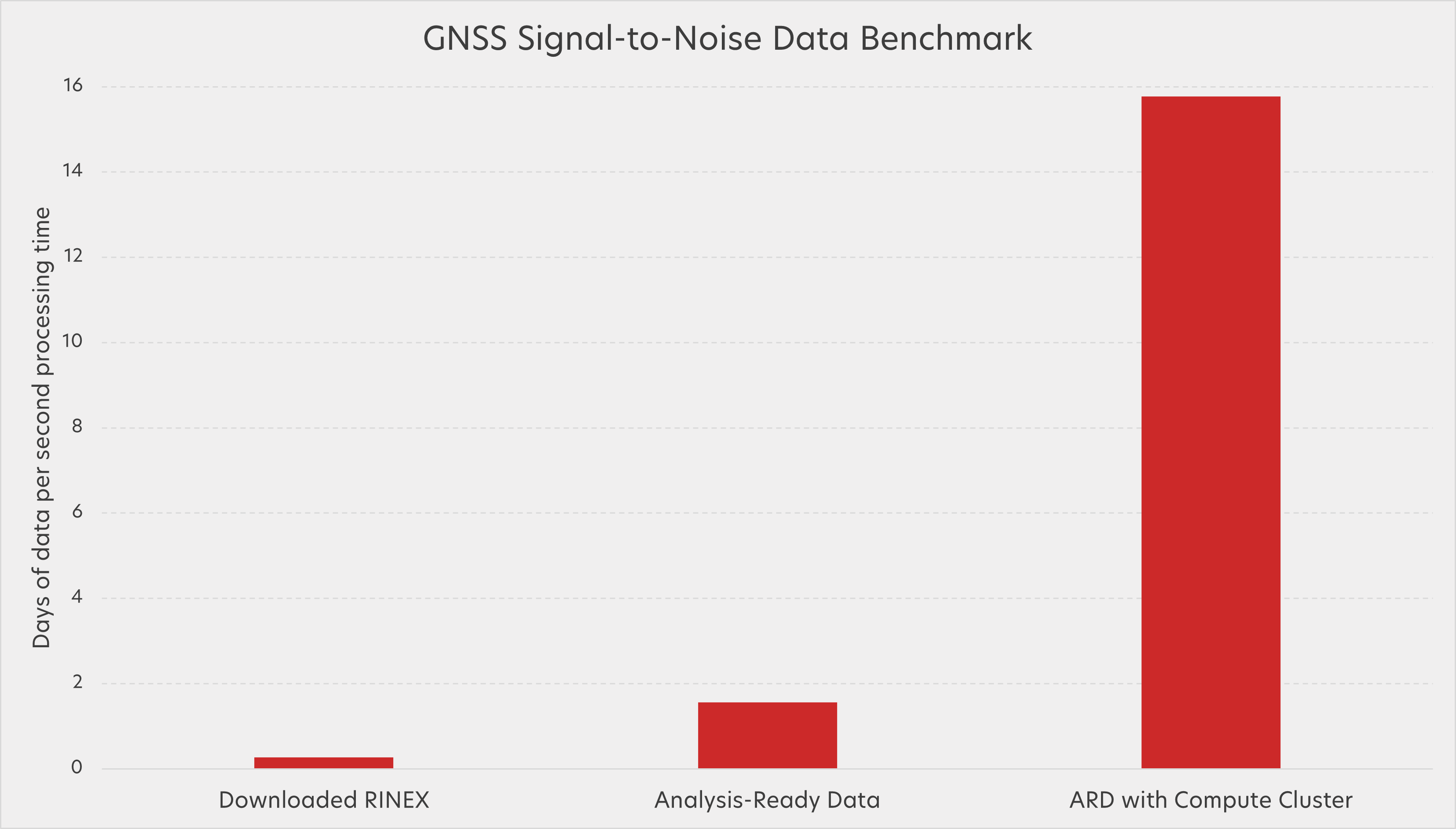
Analyze data where it lives, then scale up to a cluster
14 monthsof satellite positioning (GNSS) data processed in 27 seconds by 12 Dask workers on GeoLab
EarthScope, which operates the NSF National Geophysical Facility, built GeoLab beside its cloud-optimized geodesy archive on AWS, so researchers start in a small notebook server and scale out to a Dask cluster from the same browser tab. In June 2026 EarthScope opened GeoLab to its whole community of nearly 400 member institutions.
NASA MAAP and LEAP work the same way, with hubs beside petabytes of Earth and climate data.
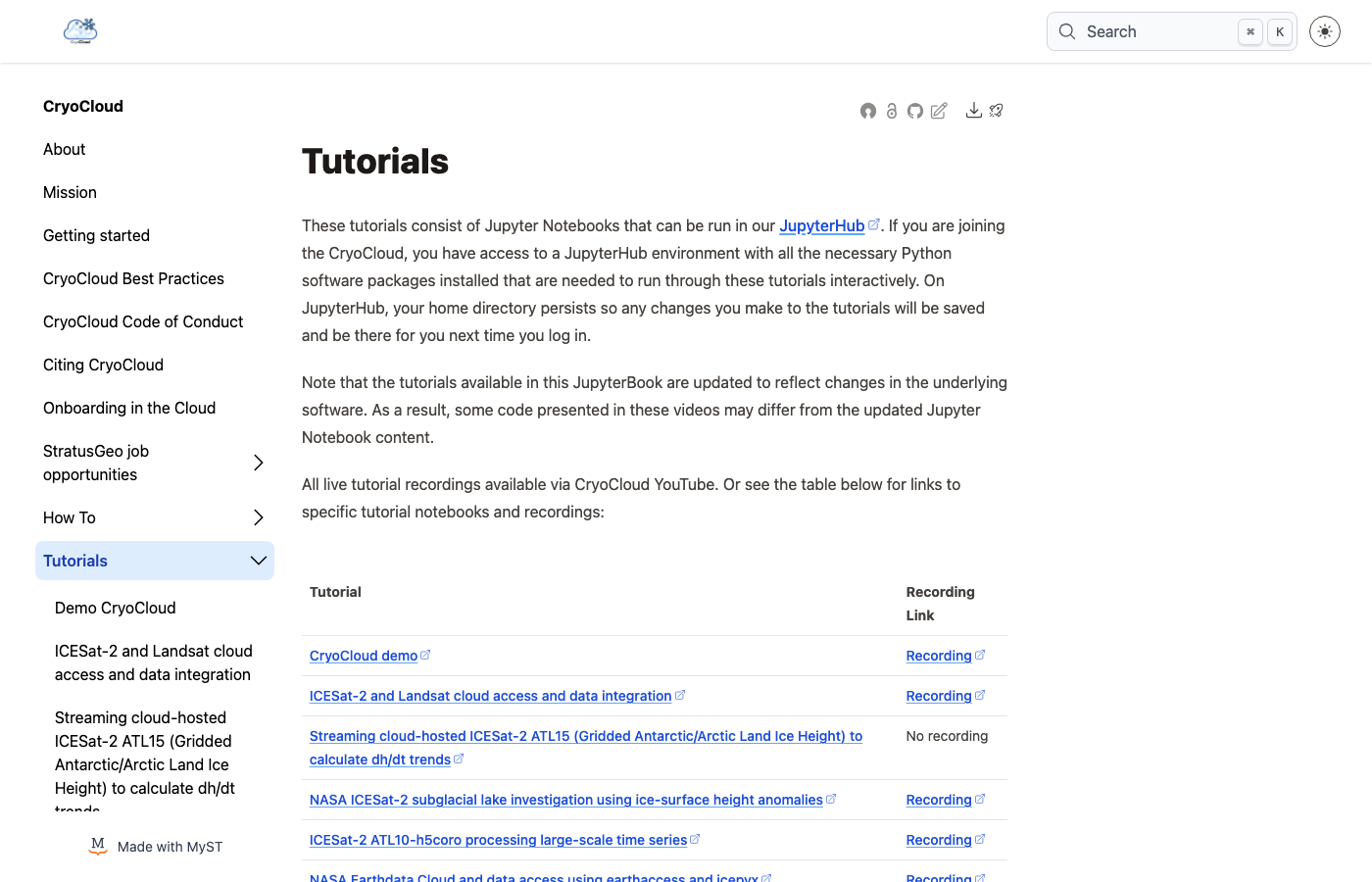
One environment where a whole field learns together
500+scientists onboarded since 2022 through workshops, hackathons, and open learning resources
CryoCloud began as a hub for NASA cryosphere scientists and now serves Earth scientists more broadly. It runs next to NASA Earth data, with several community-maintained Python and R environments and a book of tutorials that hackweeks and science teams build on. Its leaders described the approach, and the numbers here, in Democratizing Science in the Cloud: 12 hackathon-style workshops on the hub at about a dollar per person per day.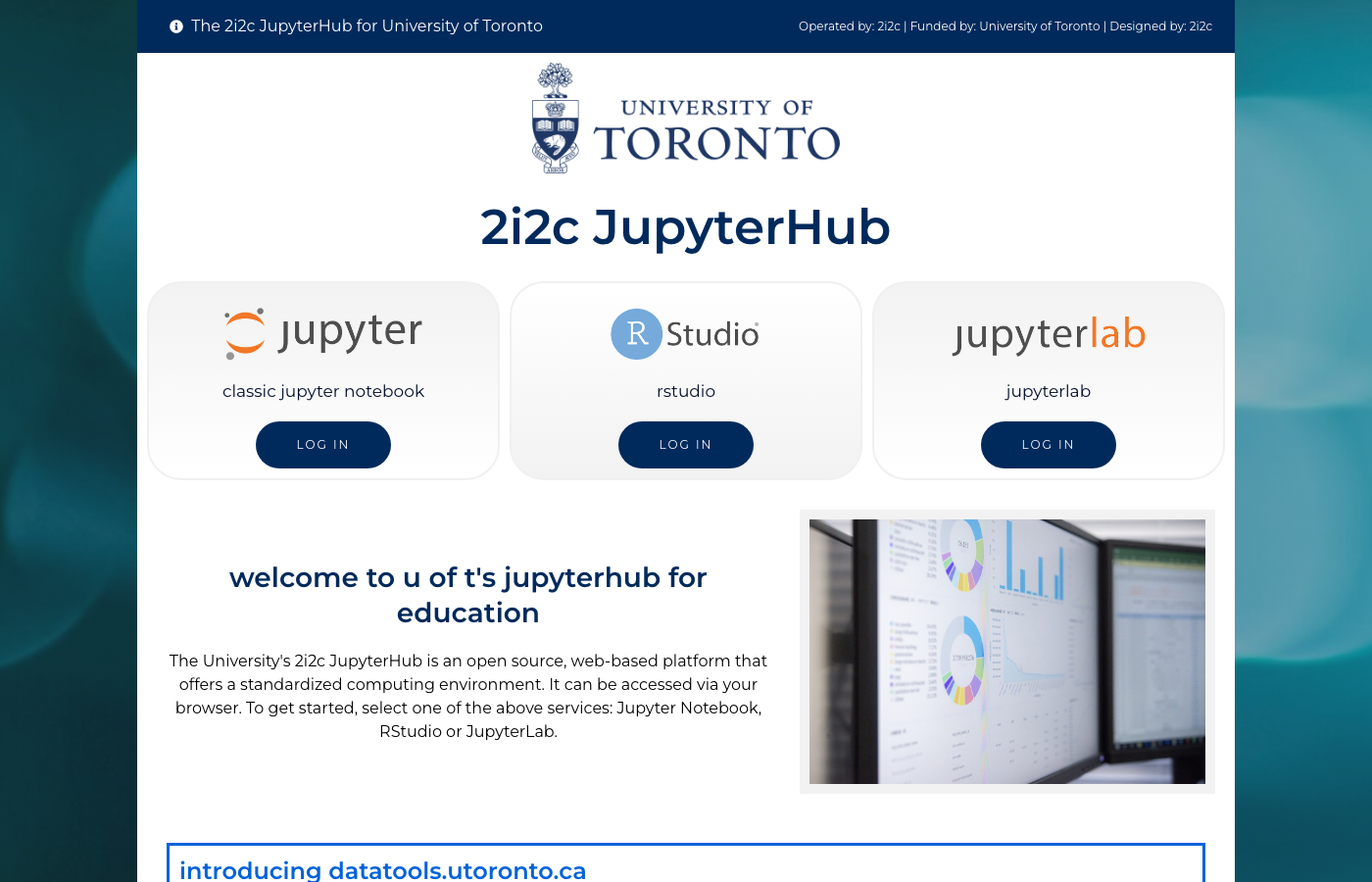
Thousands of students on one university-branded hub
>6,000educators and learners using the hub in a single day
The University of Toronto runs a Python hub, an R hub, and a high-memory hub for courses across the university, with its own support pages. Instructors share assignments as nbgitpuller links that open directly on the hub. The usage numbers, and how the hub manages storage at that scale, are on our blog.
Networks of hubs that share one setup
~100hubs run from one shared configuration
One program can sponsor hubs for many groups, with one setup and one support team. NSF’s CloudBank Classroom gives colleges the same Jupyter setup Berkeley uses for Data 8.
NASA runs the same hub software across VEDA, the GHG Center, MAAP, and Disasters. The CZI-funded Catalyst Project ran hubs for 19 biomedical groups in Africa and Latin America.
Predictable costs
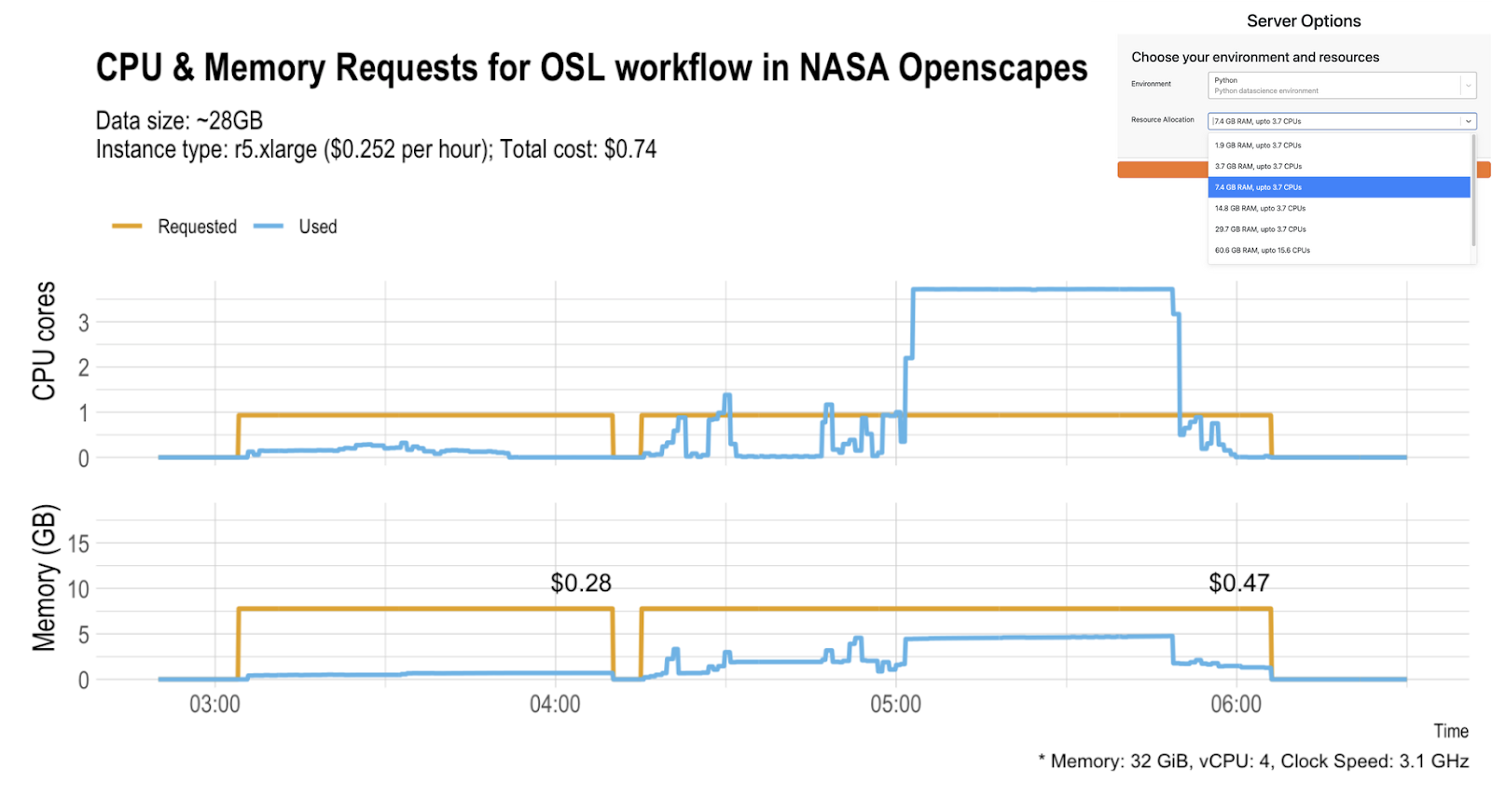
$0.74measured cost of a NASA data workflow on the Openscapes hub
Openscapes priced a real workflow on their hub from its usage metrics and AWS billing, then shared the result and their tooling with their community. Every hub reports usage the same way.
EarthScope takes a different route to the same goal. Its open hub gives each user a rolling 30-day usage quota, built on compute quotas available on any hub.
Workshops for hundreds of people at once
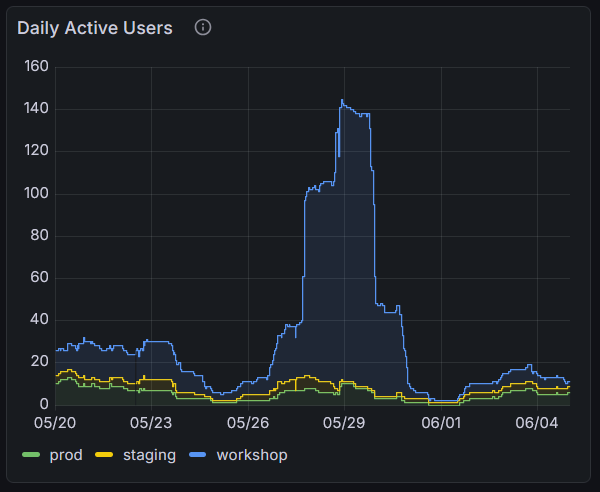
132participants a day on the CIROH workshop hub at the peak of DevCon 2026
Workshops bring hundreds of first-time users at once, for a day or two. CIROH, the NOAA-funded Cooperative Institute for Research to Operations in Hydrology, ran 12 of DevCon 2026’s 15 hands-on workshops on a dedicated workshop hub, nine of them on software images built for the sessions.
NASA Openscapes mentors did the same at a larger scale. Their machine learning workshop on the Openscapes hub drew 401 participants from 68 countries.
Notebooks, RStudio, VS Code, or a full desktop
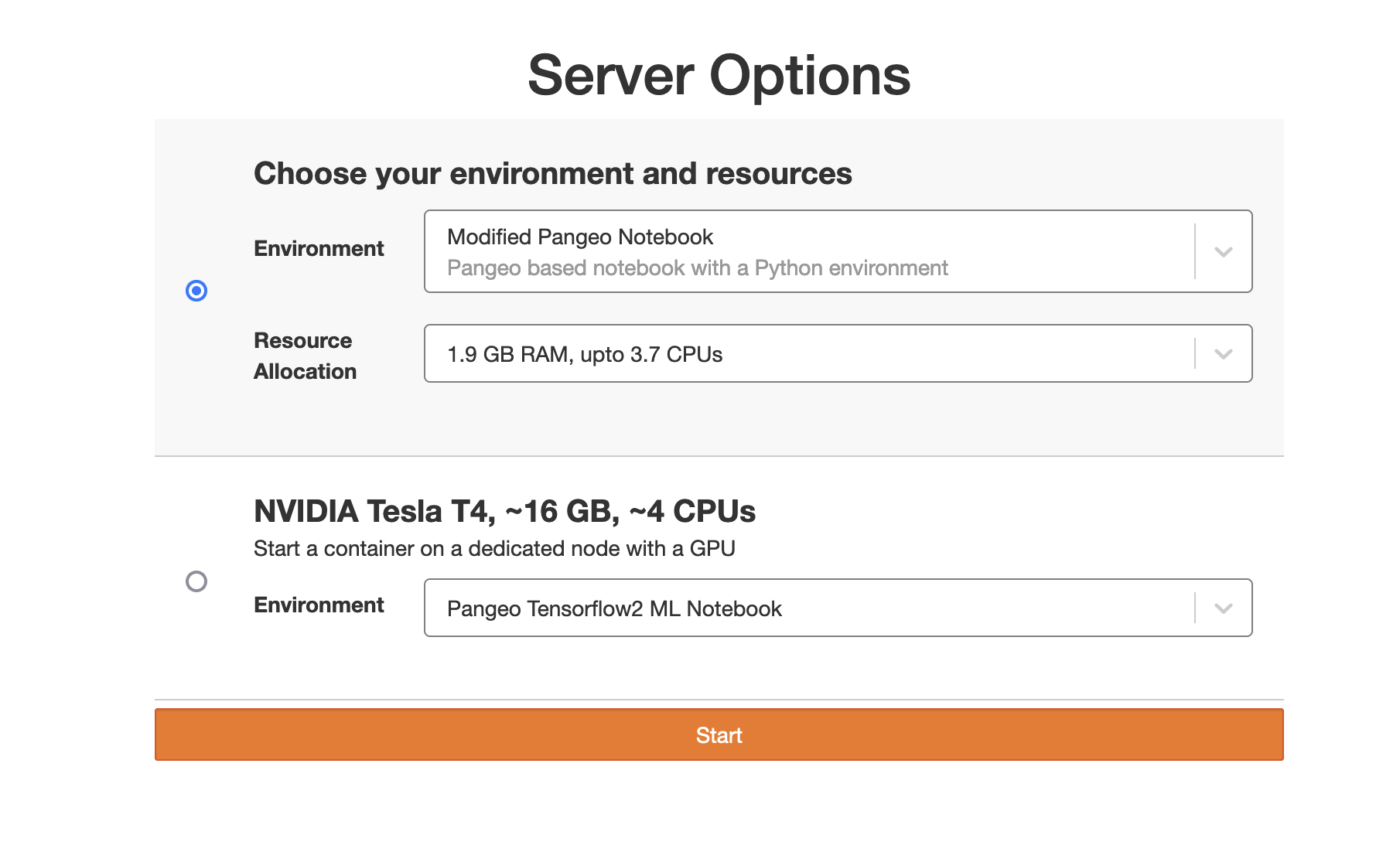
NASA VEDA’s launch page offers a Python environment, RStudio, or a Linux desktop with QGIS, each with an optional GPU. VEDA’s docs also cover VS Code on the same hub. Development Seed and 2i2c demonstrated an Open in QGIS button that takes a layer from the VEDA dashboard straight into QGIS on the hub.
On its own hub, Openscapes runs MATLAB with users’ own licenses.
GPUs for a classroom
~$200in cloud costs for the whole GPU tutorial
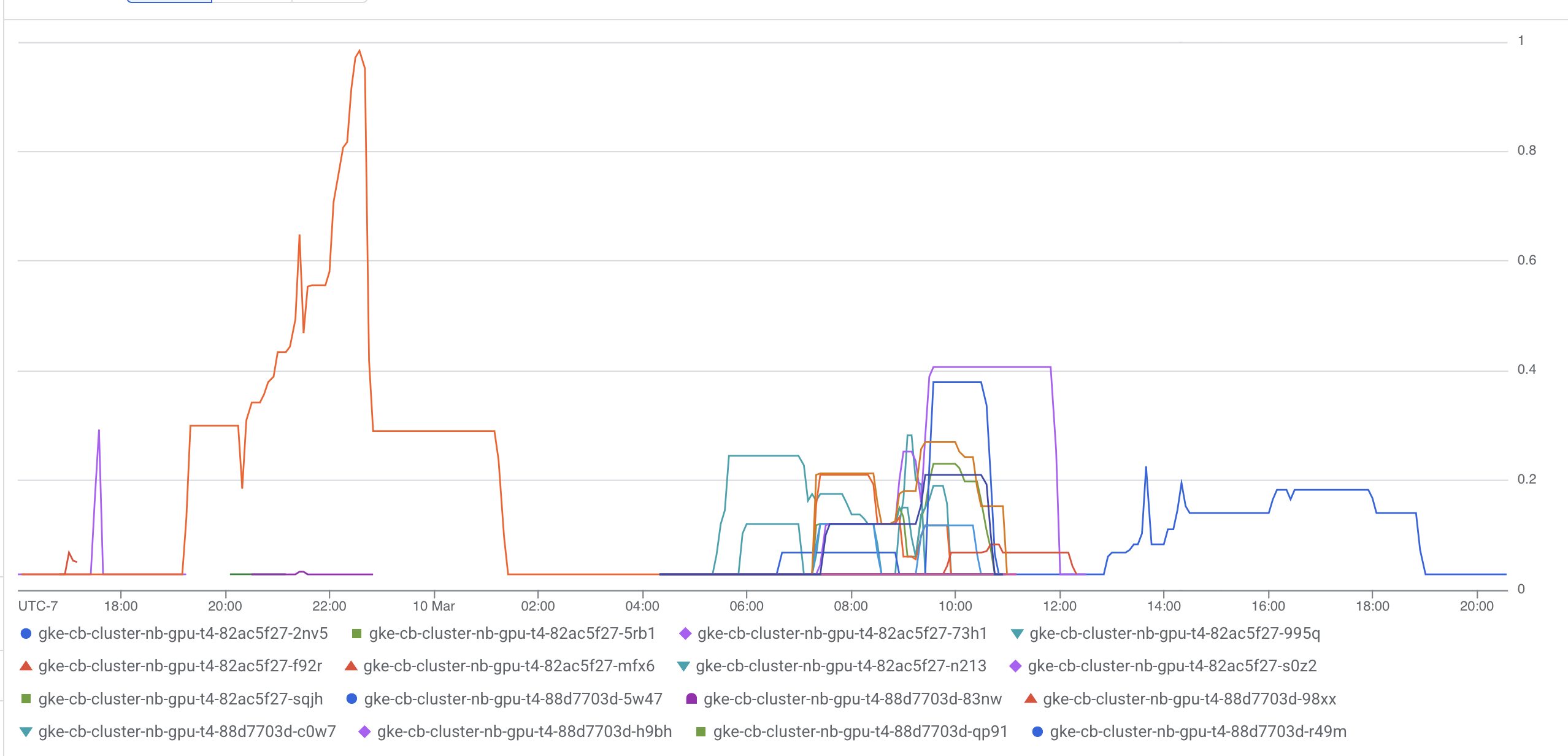
CloudBank Classroom taught Teaching in the AI Classroom at the NAIRR annual meeting on a GPU-enabled hub. The cloud provider could not supply one GPU per learner, so learners shared GPUs. 2i2c measured how much GPU each learner needed beforehand, and the tutorial ran without problems. How GPU sharing works is on our blog.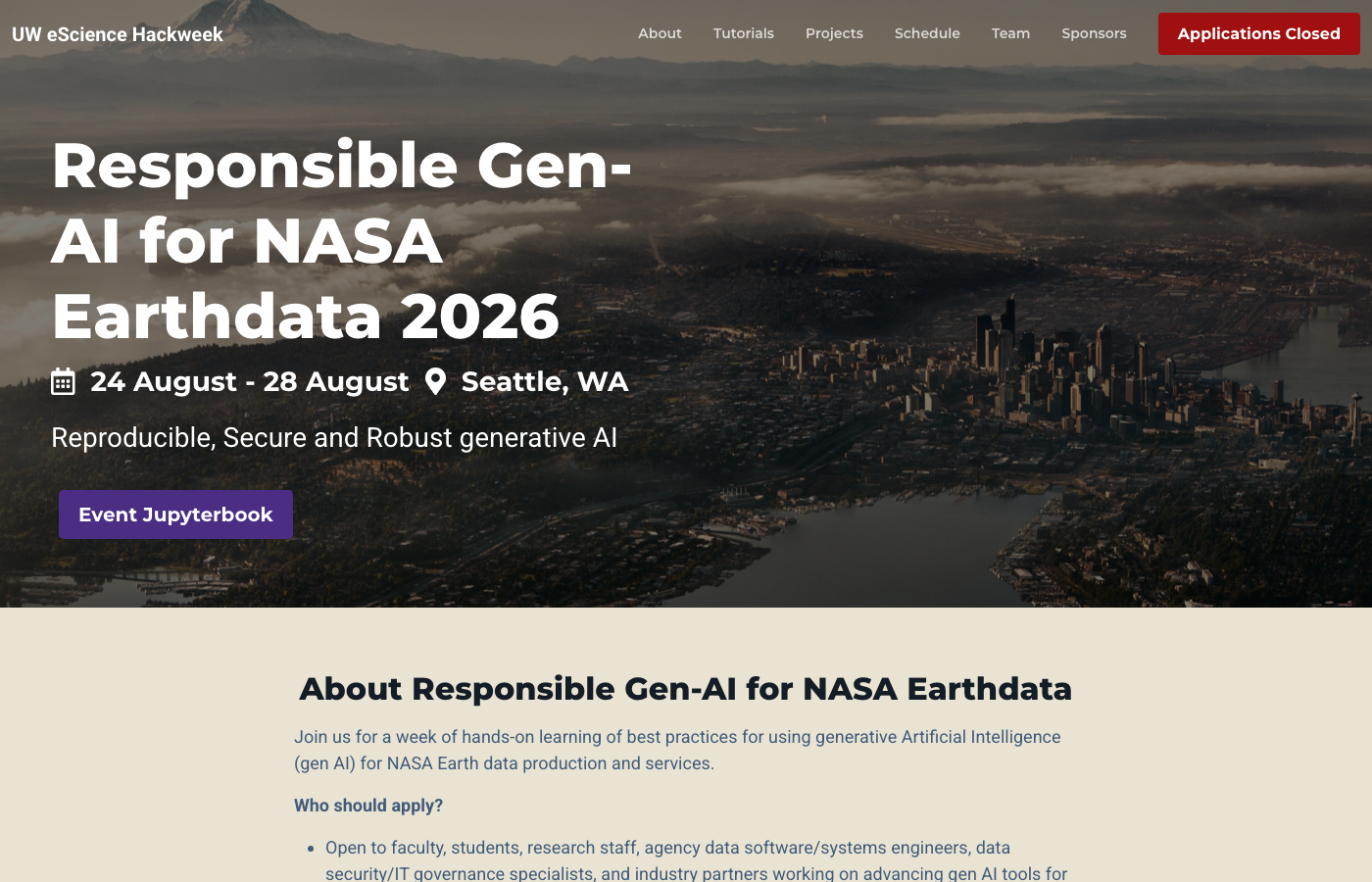
Responsible Gen-AI for NASA Earthdata
Jupyter AI and coding agents inside the hub
In August 2026 the UW eScience Institute, NASA Earthdata, and CryoCloud ran a five-day hackweek in Seattle on using generative AI for NASA Earth data responsibly. Participants worked on the CryoCloud hub, where the CryoCloud team built an image with a Jupyter AI pre-release and a coding agent that runs against open-weight models hosted by the NSF National Research Platform. This is early work, and communities are still learning how best to use generative AI in their hubs.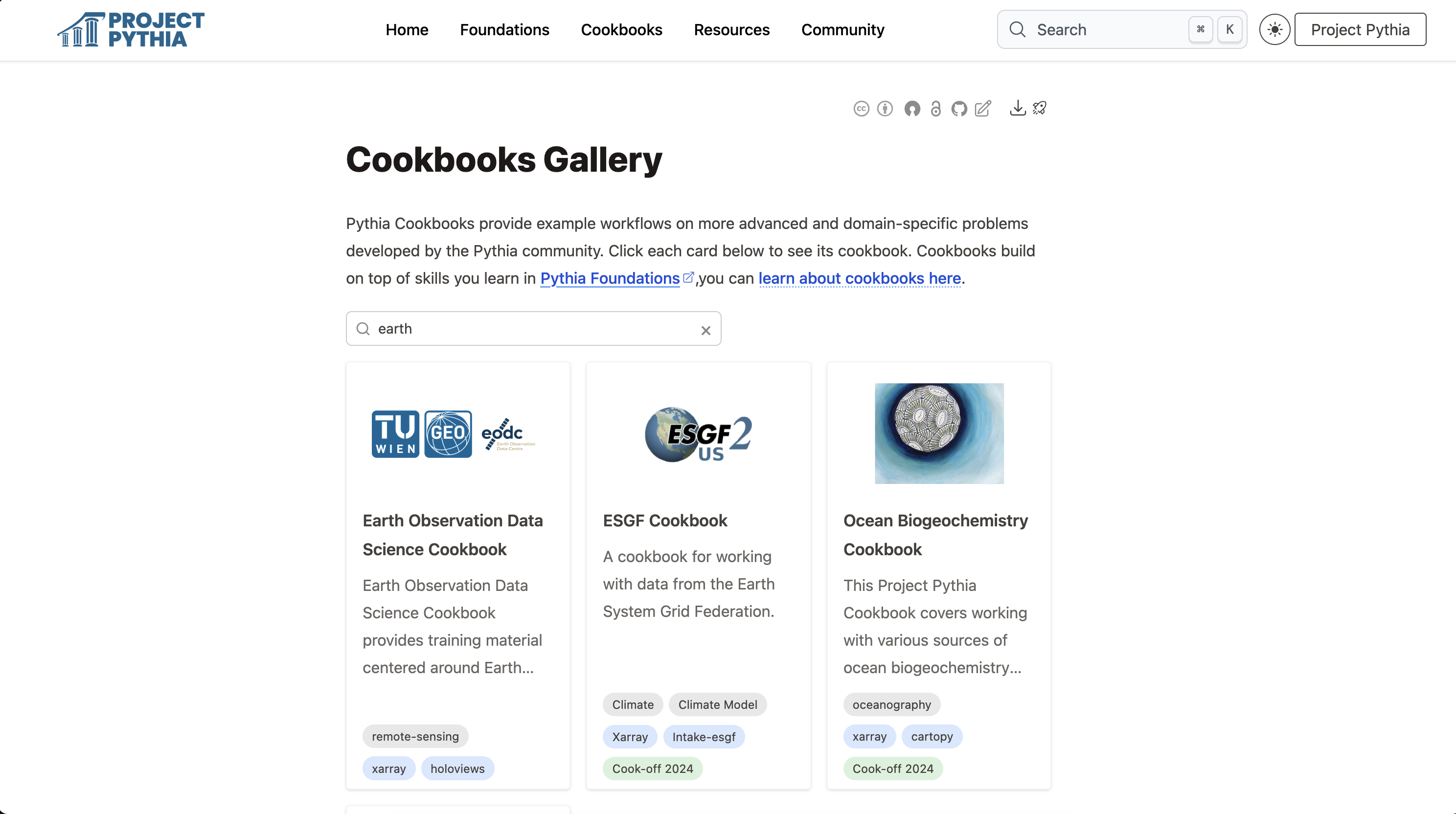
Run a published analysis from a link
30+geoscience cookbooks, each with a launch button that runs it in the browser
Project Pythia’s cookbooks are complete, re-runnable analyses. Each opens on a BinderHub, so a reader can run it without installing anything. Cookbooks that need more compute than GitHub provides run on the Pythia Binder instead. Pythia’s Binder runs on NSF Jetstream2. How we deployed it is on our blog.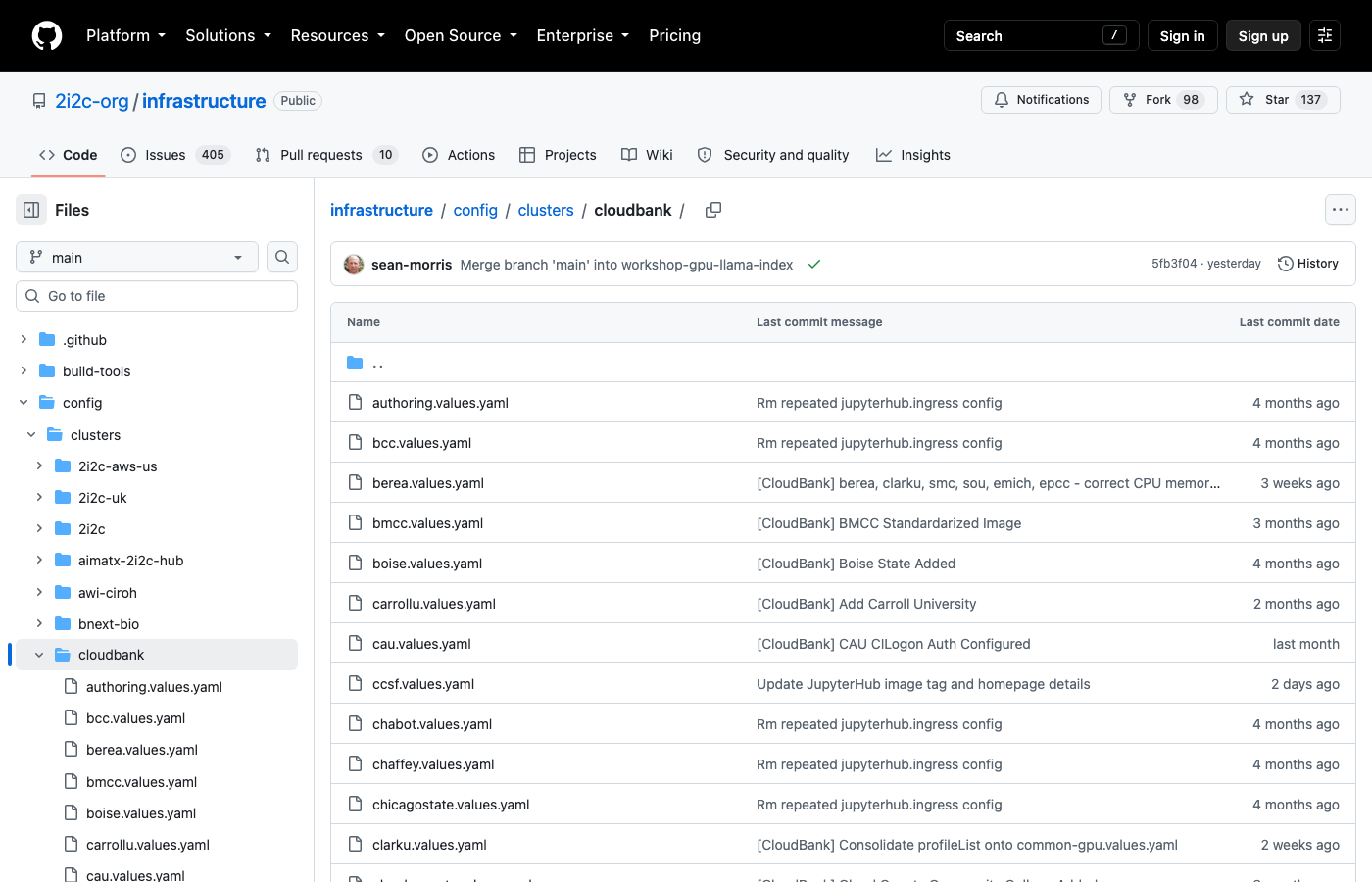
Control your hub, and take it anywhere
Communities own the tools they use. Every hub is deployed from open source and a public configuration you can fork, and you keep the right to replicate it elsewhere. CloudBank’s team now deploys changes to their own cluster.
As Catalyst Project funding wound down, CCAD in Argentina used the remaining funds to buy on-premise hardware for its own JupyterHub.
EarthScope, Openscapes, and CIROH run their hubs in cloud accounts they own.
Join our community network
Many of these communities are members or collaborators of 2i2c, and many of their hubs are sponsored by a funder or program for the field it serves. Longer versions of these stories are on our blog, and Impact & Stories has more numbers across our whole network.
If you lead a community that needs a hub, or fund communities that do, we’d like to hear from you.