Platform
Membership
About
Our mission
Our team
How we're funded
Open practices
Origin story
Jobs at 2i2c
Design and brand assets
Newsletter
Impact
Impact stories
Member communities
Collaborators and funders
Case studies
Roadmap
NEW
Docs
Blog
Join our network
Light
Dark
Automatic
Jupyterhub
Protecting our hubs against the CopyFail kernel exploit
The recently disclosed CopyFail Linux kernel zero-day (CVE-2026-31431) opens up a way for code running inside a container to break out onto the underlying node. We took a close look at our hubs to confirm whether they were exposed, confirmed that our hubs are likely not at risk, and added another layer of protection just in case.
May 4, 2026
Service-Enhancements
Supporting JupyterHub admins on workshop hubs with shared passwords
To facilitate communities using JupyterHub for a workshop, we introduced the idea of a ‘shared password’ based authentication a few years ago. This lets communities set a single global password that is handed out to all workshop attendees (instead of collecting email addresses or GitHub usernames before the workshop starts).
Apr 27, 2026
Upstream Impact
Upgrading community infrastructure to Kubernetes 1.34 and JupyterHub 4.3.3
We’ve completed a major round of infrastructure upgrades across all 2i2c-managed hubs - every hub is now running Kubernetes 1.34 and Z2JH helm chart 4.3.3. Running up-to-date versions of both Kubernetes and the JupyterHub helm chart ensures that our communities get the best support and reliability, both in terms of features and security.
Georgiana Dolocan
Apr 8, 2026
Service-Enhancements
Jenny Wong joins the JupyterHub team
We’re excited to share that Jenny Wong has been invited to join the JupyterHub team as a contributor and maintainer. Jenny’s contributions to nbgitpuller and grafana-dashboards, along with her active participation in project meetings and community planning, earned her this recognition from the JupyterHub community.
Feb 9, 2026
Upstream Impact
Community learning: Hub config to pass oauth tokens into user environments
One of our favorite things to see: communities learning from and building on each other’s work! MAAP recently contributed infrastructure configuration inspired by EarthScope’s approach to handling authentication tokens. Both communities need to pass OAuth tokens into user environments so their SDKs can access protected data - and MAAP adapted EarthScope’s pattern to fit their needs.
Chris Holdgraf
Nov 6, 2025
Community-Impact
2i2c Supports the Science Platforms Coordination IHDEA Working Group
The Science Platforms Coordination IHDEA working group (which includes our own Jim Colliander) is developing international standard software computing environments for Heliophysics. The working group recently presented their work at two major conferences: ML-Helio in Madrid and DASH/IHDEA in San Antonio.
Oct 30, 2025
Community-Impact
AWI-CIROH showcases cloud infrastructure at their DevCon 2025
CIROH published a post on their DocuHub blog about their cloud infrastructure success at DevCon 2025, highlighting how their JupyterHub deployment supported the conference’s interactive computing needs. Read the full post: DevCon 2025 Infrastructure
Arpita Patel
,
April Johnson
Jun 12, 2025
Impact
Announcing `jupyterhub-groups-exporter`: monitor usage based on JupyterHub group membership with Prometheus and Grafana
Managing user groups in JupyterHub can be a challenging task, especially in environments with dynamic user bases and complex group structures. This post describes how we can leverage the latest group management features in JupyterHub, along with Prometheus and Grafana, to monitor group-level resource usage effectively.
Jenny Wong
Jun 11, 2025
Service-Enhancements
2i2c hubs now run JupyterHub 5.0
We are excited to announce that all 2i2c hubs now run JupyterHub 5.0! This is an upgrade that brings some exciting new features and improvements. Some of the highlights include:
Georgiana Dolocan
Jan 17, 2025
Service-Enhancements
Improving the logged in home page experience in JupyterHub with `jupyterhub-fancy-profiles`
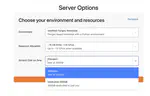
On most research oriented JupyterHub installations, users would like to customize their server (the environment, resources available, etc) after logging in. In Kubernetes based JupyterHub environments, a profile list provides this functionality.
Yuvaraj (Yuvi)
Nov 18, 2024
Service-Enhancements
»